






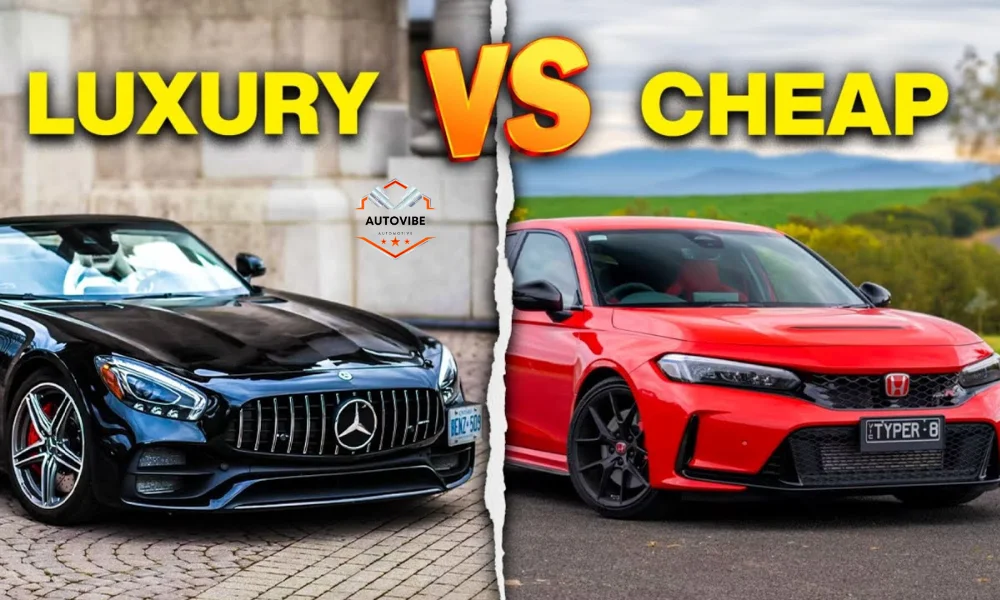
When it comes to purchasing a car, one of the biggest decisions you’ll face is whether to opt for a luxury car or an economy car. Both types of vehicles have their advantages and drawbacks, and choosing the right one depends on your personal preferences, budget, and driving habits. In this article, we’ll provide an in-depth comparison between luxury cars and economy cars, focusing on key factors like performance, features, cost, and overall value. By the end, you’ll have a clearer idea of which type of car suits your lifestyle and needs.
Performance and Handling: How Luxury and Economy Cars Differ
One of the most noticeable differences between luxury cars and economy cars is their performance. Luxury vehicles are typically equipped with more powerful engines, advanced suspension systems, and cutting-edge technology designed to provide a smoother and more enjoyable driving experience. These cars are engineered for high performance, offering superior acceleration, better handling, and a quieter ride. Whether you’re cruising on the highway or navigating city streets, the enhanced performance of a luxury car is immediately apparent.
On the other hand, economy cars are designed with practicality and efficiency in mind. While they may not offer the same high-speed performance or handling as luxury vehicles, they provide excellent fuel efficiency and are easier to maneuver in congested areas. If you’re looking for a car that gets you from point A to point B with minimal hassle and great mileage, an economy car might be the better choice.
Cost: Initial Price and Long-Term Expenses
When it comes to cost, there is a significant gap between luxury cars and economy cars. Luxury cars come with a higher price tag due to their premium materials, advanced technology, and enhanced performance features. The initial cost of a luxury car can range from $40,000 to over $100,000 depending on the brand and model. Additionally, maintaining a luxury car can be more expensive due to higher repair costs, premium fuel requirements, and pricier parts.
In contrast, economy cars are much more affordable, with most models ranging from $15,000 to $30,000. These vehicles are built with cost-efficiency in mind, making them more accessible to a wider range of buyers. Economy cars also tend to have lower maintenance costs and better fuel efficiency, which can save you money in the long run. For drivers on a budget or those looking to minimize long-term expenses, economy cars offer excellent value for money.
Features: Luxury vs. Economy Technology and Comfort
Luxury Car Features
One of the biggest selling points of a luxury car is its array of advanced features. These vehicles are often equipped with high-end materials such as leather seats, wood accents, and premium sound systems. In addition to comfort, luxury cars come with state-of-the-art technology, including large infotainment screens, voice-activated controls, adaptive cruise control, and advanced safety features like lane departure warning and automatic emergency braking.
Many luxury cars also offer customization options, allowing buyers to select specific features and finishes that match their preferences. These personalized touches contribute to a higher level of comfort and satisfaction, making luxury cars the top choice for drivers who prioritize comfort, convenience, and cutting-edge technology.
Economy Car Features
While economy cars may not have the same level of luxury, they still offer a variety of features that appeal to practical drivers. Modern economy cars come with essential tech, such as touchscreen infotainment systems, smartphone integration (Apple CarPlay and Android Auto), and basic safety features like rearview cameras and blind-spot monitoring.
Economy cars are designed to be lightweight and efficient, which helps them achieve better fuel economy. They may lack the high-end materials and advanced features of luxury cars, but they provide reliable, no-frills transportation with a focus on practicality and affordability.
Fuel Efficiency: Who Comes Out on Top?
When comparing luxury cars and economy cars in terms of fuel efficiency, economy cars are the clear winners. Most economy cars are equipped with smaller, more efficient engines that help drivers get the most out of every gallon of gas. Many economy cars can achieve over 30 miles per gallon (MPG) in combined city and highway driving, making them ideal for long commutes or city driving where fuel costs can add up quickly.
Luxury cars, on the other hand, tend to have larger, more powerful engines that consume more fuel. While some luxury car manufacturers are focusing on hybrid or electric powertrains to improve fuel efficiency, traditional gas-powered luxury cars still lag behind economy cars in terms of MPG. If saving money on fuel is a top priority for you, an economy car is the smarter choice.
Resale Value: Which Car Holds Its Value Better?
Resale value is another important factor to consider when choosing between a luxury car and an economy car. Luxury cars often have a higher depreciation rate, meaning they lose a significant portion of their value in the first few years. This is due in part to the higher cost of new luxury vehicles and the fact that luxury buyers are often looking for the latest models with the newest features.
However, some luxury brands, like Mercedes-Benz and Lexus, tend to hold their value better than others due to their reputation for quality and reliability. If you’re considering a luxury car, it’s important to research which brands and models have the best resale value to avoid significant depreciation.
In contrast, economy cars tend to depreciate more slowly because of their lower initial cost and widespread demand in the used car market. Economy cars are seen as reliable, affordable vehicles that are ideal for first-time buyers or those looking for a cost-effective option. As a result, economy cars generally hold their value better over time, making them a smarter financial investment for many drivers.
Safety: How Do Luxury and Economy Cars Compare?
When it comes to safety, both luxury and economy cars can offer excellent protection, depending on the make and model. Many luxury cars come standard with advanced safety features, such as adaptive cruise control, lane-keeping assist, and automated emergency braking. These features use sensors and cameras to monitor the road and assist the driver in avoiding accidents, providing an additional layer of safety.
While economy cars may not have all the advanced safety features found in luxury cars, many modern economy vehicles still come with essential safety systems like anti-lock brakes, stability control, and airbags. Additionally, some manufacturers offer optional safety packages for economy cars that include more advanced features, such as lane departure warning and collision avoidance systems.
It’s worth noting that many luxury cars also undergo more rigorous crash testing and often score higher on safety ratings than economy cars. However, it’s entirely possible to find a safe and reliable economy car that meets all of your safety needs, especially if you’re willing to add some optional safety features.
Comfort and Ride Quality: Luxury Takes the Lead
When it comes to comfort and ride quality, luxury cars clearly take the lead. Luxury vehicles are designed with comfort in mind, offering plush seating, high-end materials, and superior sound insulation to reduce road noise. Additionally, luxury cars often come with adaptive suspension systems that automatically adjust to changing road conditions, providing a smooth and comfortable ride no matter where you’re driving.
In contrast, economy cars are more focused on practicality than comfort. While modern economy cars have certainly improved in terms of comfort and ride quality, they typically don’t offer the same level of refinement as luxury cars. Economy cars tend to have stiffer suspensions and less noise insulation, which can result in a bumpier ride, especially on rough roads. If comfort is a top priority for you, a luxury car is the better choice.
Environmental Impact: Going Green with Luxury and Economy Cars
When it comes to the environmental impact of luxury and economy cars, economy cars generally have a smaller carbon footprint due to their fuel efficiency and smaller engines. However, in recent years, many luxury car manufacturers have been focusing on reducing their environmental impact by developing hybrid and electric models.
Electric luxury cars, such as those produced by Tesla, offer zero-emissions driving and are often considered more environmentally friendly than traditional gas-powered economy cars. Additionally, luxury hybrid vehicles combine electric and gasoline power, providing drivers with a balance of performance and efficiency. If you’re environmentally conscious and still want the premium experience of a luxury car, opting for a hybrid or electric model can help reduce your carbon footprint.
Conclusion
When deciding between a luxury car and an economy car, it ultimately comes down to your individual priorities. If you value performance, advanced features, and comfort, and are willing to pay a premium for these benefits, a luxury car may be the right choice for you. On the other hand, if affordability, fuel efficiency, and long-term savings are more important, an economy car offers excellent value and practicality.
Both luxury and economy cars have their own unique strengths, and choosing the right one depends on your budget, driving habits, and lifestyle. By carefully considering these factors, you can make an informed decision that will provide you with the best driving experience for years to come.
Written by: Felipe Bueno